

The Real Benefits of Coloring for Kids
Fine motor skills, focus, calm and creativity — what coloring really builds, age by age.

Quick answer
Coloring helps kids develop fine motor control and pencil grip, hand–eye coordination, focus and patience, color and shape recognition, and self-expression. It’s also a calming, screen-free activity. Benefits grow when children are free to choose colors, add their own details and talk about their pictures.
Key takeaways
- Coloring strengthens the small hand muscles children later use for writing.
- Staying (roughly) inside lines builds hand–eye coordination and focus.
- Free choice of colors and added details turns coloring into creative work.
- It’s a calm, portable, screen-free activity for waiting rooms and travel.
What are the benefits of coloring for kids?
Fine motor skills
Gripping crayons and controlling strokes builds hand strength for writing.
Focus & patience
Finishing a page is a gentle exercise in attention and persistence.
Learning concepts
Colors, shapes, letters, animals — coloring pages are full of vocabulary.
Calm & expression
Coloring is soothing, and color choices let kids show how they feel.
Early childhood educators often describe the difference between product art (making something that looks like a model) and process art (exploring materials freely). Coloring books sit nicely in between: the outline gives structure and confidence, while the colors, patterns and backgrounds are entirely up to the child.

What does coloring build at each age?
| Age | What you’ll see | Skills growing | Best materials |
|---|---|---|---|
| 2–3 years | Big scribbles, whole-arm movements | Grip, cause and effect, color names | Chunky crayons, large simple shapes |
| 4–5 years | Coloring mostly inside large areas | Hand–eye coordination, focus, shapes | Crayons and washable markers, bold outlines |
| 6–8 years | Choosing colors on purpose, adding details | Control, planning, patterns, storytelling | Colored pencils, themed books (animals, fairies, careers) |
| 9–12 years | Shading, blending, intricate designs | Patience, precision, mindfulness | Fine-tip markers, detailed or doodle-style pages |
How can coloring become more imaginative?
Add a background
“Where does this mermaid live? Draw her home!”
Invent impossible colors
A purple lion with rainbow stripes? Absolutely. Free color choice is creative thinking.
Tell the picture’s story
Ask what happened just before and just after the scene on the page.
Make it a gift
Finished pages become cards, bookmarks or wrapping paper — a lovely confidence boost.
Color while listening
Pair coloring with one of our free audiobooks for a calm, imaginative quiet time.

“A coloring page is a beginning, not an answer. The best part is everything a child adds that isn’t printed there.”

Is coloring good for calming children?
Many families find coloring a natural “wind-down” activity: it’s repetitive, quiet and absorbing, and it gives busy hands something to do. It’s especially useful for transitions — after school, before bed, in waiting rooms or on long trips. If a child is frustrated by detailed pages, switch to simpler designs; coloring should feel relaxing, not like a test.
How do I choose the right coloring book?
- Match detail to age. Thick, bold outlines and big spaces for ages 3–5; finer details and patterns for 8 and up.
- Follow their passions. Unicorns, mermaids, fairies, animals or careers — interest keeps children coloring longer.
- Look for single-sided pages. Markers won’t bleed through onto the next picture, and pages can be removed to display.
- Choose some open space. Pages with room for backgrounds invite children to add their own ideas.
- Mix in activity pages. Mazes, dot-to-dots and puzzles add variety and build different skills.
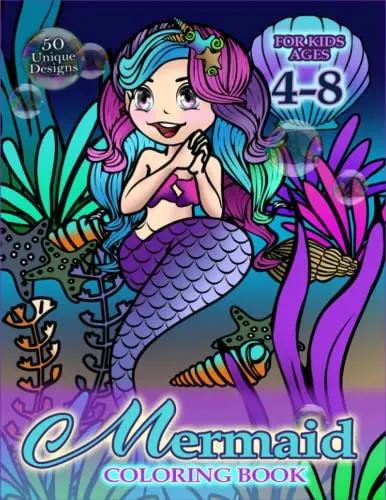
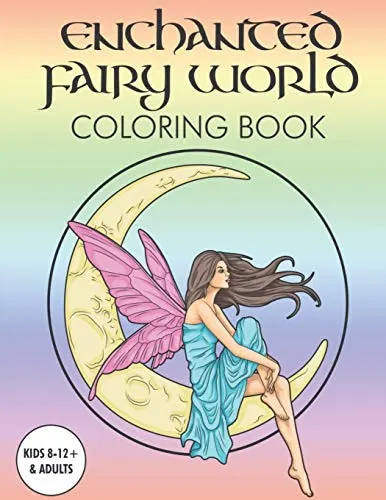
Coloring and activity books to try
Our coloring and activity books are designed in two age bands, with bold outlines for little hands and more detailed pages for older kids.


Frequently asked questions
At what age should a child start coloring?
Most children can start scribbling with chunky crayons around 15 to 18 months to 2 years. Coloring inside shapes develops gradually between ages 3 and 5.
Does coloring help with handwriting?
Coloring strengthens the small hand muscles and the control children need for writing, and it gives lots of practice holding a crayon or pencil.
Is it okay if my child colors outside the lines?
Yes. Coloring outside the lines is normal, especially before age five, and free exploration is valuable creative play. Precision improves with age and practice.
Are coloring books bad for creativity?
Not when used alongside free drawing. Coloring books provide structure and confidence, and adding backgrounds, patterns and stories keeps them creative.