
The Power of Creative Play
See how creative play helps kids build confidence, solve problems, and express their unique ideas.

Quick answer
Creative play is open-ended, child-led play — pretending, building, making art, inventing games — where there is no fixed outcome. It matters because it builds problem-solving, language, self-control, social skills and confidence. The American Academy of Pediatrics calls play essential to healthy development, not a reward for finishing “real” learning.
Key takeaways
- Creative play is child-led and open-ended: the child decides what happens.
- It builds executive function — planning, flexible thinking and self-control.
- Simple, open-ended toys (blocks, boxes, dress-ups, art supplies) invite the most creativity.
- Adults help most by providing time, space and materials — then following the child’s lead.
What is creative play?
Creative play is any play where a child uses their imagination to make something new: a story, a world, a game, a picture or an invention. Unlike a board game or a worksheet, there’s no single right way to do it. A stick can become a magic wand, a horse or a microphone — the child decides.
Common types of creative play include:
- Pretend (dramatic) play — playing house, shop, doctor or superheroes.
- Construction play — building with blocks, boxes, sand or recycled materials.
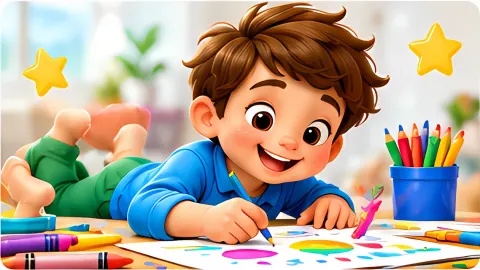
- Art and making — drawing, coloring, painting, modeling and collage.
- Music and movement — making up songs, dances and rhythms.
- Storytelling — inventing tales with toys, puppets or just words.
Why is creative play important for development?
Problem-solving
When the tower falls, children test new ideas until it stands.
Language
Pretend play is full of negotiating, describing and storytelling.
Social skills
Sharing roles and rules teaches turn-taking, empathy and cooperation.
Confidence
Making something from nothing shows children their ideas matter.
In its clinical report The Power of Play, the American Academy of Pediatrics explains that play supports the development of executive function — the mental skills that help children plan, focus, remember instructions and manage their feelings. It also notes that play helps children cope with stress and builds safe, stable relationships with the adults who play with them.

“When children play, they’re rehearsing for life — trying on courage, kindness and big ideas in a world where mistakes are safe.”

Which toys encourage the most creativity?
The simpler the toy, the more the child has to imagine. “Open-ended” materials can be used in endless ways:
| Open-ended material | What children make of it |
|---|---|
| Blocks and cardboard boxes | Castles, rockets, shops, robots |
| Dress-up clothes and scarves | Superheroes, royalty, astronauts, animals |
| Crayons, paper and coloring books | Pictures, maps, comics, invented creatures |
| Play dough and clay | Food for a pretend café, monsters, tiny zoos |
| Loose parts (buttons, corks, shells) | Patterns, characters, treasure |
How can parents support creative play?
Give unhurried time
Deep play takes a while to get going. Protect some unscheduled time each day.
Follow, don’t lead
Join in as a character in your child’s game: “I’m a customer — what do you sell?”
Tolerate a little mess
A painting mat, washable supplies and a “play can stay out” corner make creativity easier.
Use stories as springboards
After reading, act out the story or invent a sequel. Books like The Butterfly Effect and Little Astronauts are full of play ideas.
Value the process
Ask about choices and ideas, not just the finished product.
What does creative play look like at each age?
| Age | Typical creative play | Easy ways to support it |
|---|---|---|
| 2–3 years | Simple pretend (feeding a teddy), scribbling, stacking | Name what they do; offer chunky crayons and soft toys |
| 4–5 years | Role-play with friends, building with a plan, inventing songs | Dress-up box, blocks, “What happens next?” questions |
| 6–8 years | Rules-based imaginary games, comics, more detailed art and models | Recycled materials, story prompts, time to finish projects |
| 9–12 years | Inventing games, writing stories, design and making projects | Space to work, tools, encouragement to share their creations |
If your child seems “too old” for pretend play, they’re often still doing it — just in new forms like building worlds, drawing comics or making up games with friends.
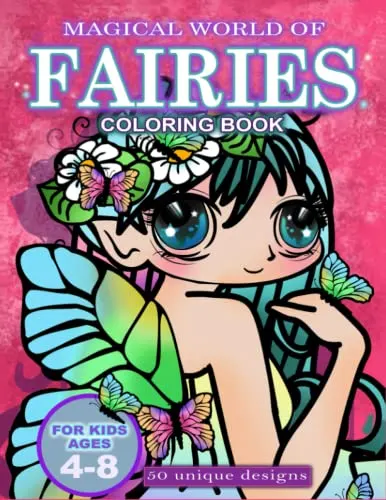
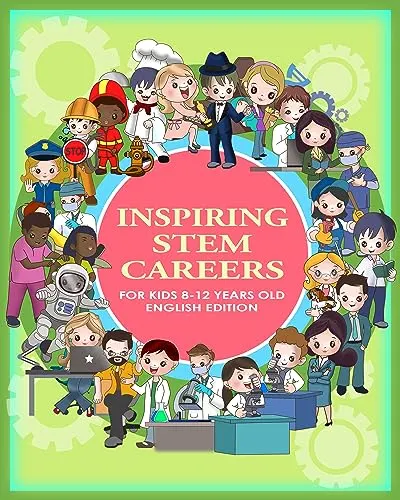
Stories that inspire creative play


Frequently asked questions
What is an example of creative play?
Turning a cardboard box into a spaceship, setting up a pretend bakery, building a block city, painting with sponges or making up a song are all examples of creative play.
How does creative play help child development?
It builds problem-solving, language, executive function, social skills and emotional resilience, according to the American Academy of Pediatrics' report The Power of Play.
How much playtime does a child need?
There is no fixed number, but pediatric guidance emphasizes daily unstructured play. Protecting some free, unscheduled time every day is a good goal.
Sources & further reading
- The Power of Play: A Pediatric Role in Enhancing Development in Young Children — American Academy of Pediatrics, Pediatrics (2018)
- NAEYC (National Association for the Education of Young Children) — resources on play and process art
- Center on the Developing Child, Harvard University — “Serve and Return” interaction