

Raising Kind, Confident and Creative Kids
Practical, heartfelt tips to help children grow kind, confident and full of ideas.

Quick answer
To raise kind, confident and creative kids, praise effort rather than talent, respond warmly to your child’s ideas (“serve and return”), model kindness out loud, give real responsibilities, let children try and fail safely, and make daily space for play and stories. Small, consistent moments matter more than big gestures.
Key takeaways
- Praise effort and strategies, not fixed traits like “smart.”
- Back-and-forth conversation builds the brain architecture for learning.
- Kindness is learned by watching and practicing — name it when you see it.
- Confidence grows from real competence: let kids do hard (safe) things.
How do you teach a child to be kind?
Model it out loud
Children notice what we do more than what we say. Narrate small kindnesses: “I’m holding the door because his hands are full.”
Name kindness when you see it
“You shared your crayons — look how happy she is.” Specific feedback helps children connect actions with feelings.
Practice empathy with stories
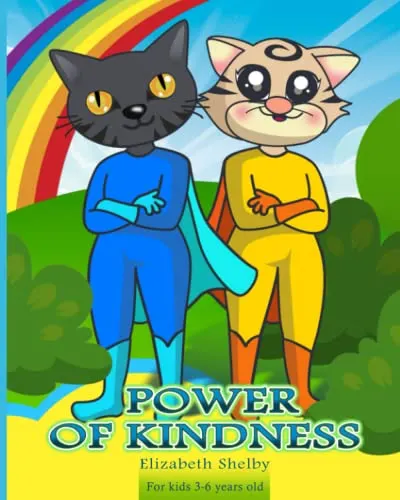
Ask, “How do you think the character feels? What could help?” Books like Power of Kindness make these conversations easy.
Make kindness a habit
Try a weekly “kindness mission.” In one study, preteens who did acts of kindness for four weeks became more accepted by classmates.

How do you build a child’s confidence?
Praise effort, not labels
Classic research by psychologists Claudia Mueller and Carol Dweck found that children praised for intelligence were more likely to avoid challenges after a setback, while children praised for effort persisted. Try: “You worked really hard on that,” instead of “You’re so smart.”
Give real responsibilities
Setting the table, feeding a pet or packing their own bag shows children they’re capable and needed.
Let them struggle a little
Wait a moment before rescuing. Solving a small problem themselves builds resilience — the theme of Power of Grit.

“Confidence isn’t told to a child. It’s built, one “I did it!” at a time.”

How do you nurture creativity every day?
Serve and return
Harvard’s Center on the Developing Child describes “serve and return” — responding to a child’s words, gestures and ideas — as a key ingredient in healthy brain development. When your child shares a wild idea, hit the ball back: “Ooh, then what happens?”
Protect playtime
Unscheduled time to play, draw and daydream is where creativity grows.
Share stories daily
Reading together introduces new worlds, words and possibilities — and gives you endless things to talk about.
Helpful phrases to use (and swap)
| Instead of… | Try… |
|---|---|
| “You’re so smart!” | “You kept trying different ways — and it worked!” |
| “That’s beautiful.” | “Tell me about your picture. How did you choose these colors?” |
| “Be nice.” | “How could we help him feel better?” |
| “Let me do it.” | “What could you try next?” |
| “Stop crying.” | “You’re really upset. I’m here. Let’s take a breath together.” |
Try a 7-day family kindness challenge
Small, specific actions make kindness concrete for children. Try one a day, then talk about how it felt:
Day 1 — Kind words
Give three real compliments to family members.
Day 2 — Helping hands
Do a chore for someone without being asked.
Day 3 — Thank-you note
Draw or write a note for a teacher, neighbor or grandparent.
Day 4 — Include someone
Invite a sibling or friend to join a game.
Day 5 — Share a story
Read a picture book to a younger child or a stuffed animal audience.
Day 6 — Kind to nature
Water plants, fill a bird feeder or pick up litter (with gloves).
Day 7 — Kind to yourself
Name one thing you’re proud of trying this week.
Books that teach kindness, grit and confidence



Frequently asked questions
At what age do children learn kindness?
Toddlers show early signs of empathy, such as comforting someone who is upset. Kindness keeps developing through childhood with modeling, conversation and practice.
Is it bad to tell my child they are smart?
It is not harmful occasionally, but research suggests praising effort and strategies helps children persist through challenges more than praising fixed traits like intelligence.
What is serve and return?
Serve and return is a term from Harvard's Center on the Developing Child for the back-and-forth interactions between children and caregivers, such as responding to a baby's babble or a child's question, which help build healthy brain architecture.
How can books help raise kind kids?
Stories let children step into other people's shoes. Asking how characters feel and what they could do builds empathy and gives families a shared language for kindness.
Sources & further reading
- Mueller & Dweck, Praise for Intelligence Can Undermine Children's Motivation and Performance, Journal of Personality and Social Psychology (1998)
- Center on the Developing Child, Harvard University — “Serve and Return” interaction
- Layous et al., Kindness Counts: Prompting Prosocial Behavior in Preadolescents Boosts Peer Acceptance and Well-Being, PLOS ONE (2012)
- Greater Good Science Center, UC Berkeley — research on kindness, gratitude and empathy